

Postpartum Depression: Recognizing the Signs and Knowing When to Get Help
August 27, 2026
North Carolina is home to more than 11 million people, and at Apogee Behavioral Medicine, we believe mental health is essential to their overall well-being.
Yet across our state, access to quality mental health care remains uneven. Conditions such as depression, anxiety, PTSD, and ADHD affect North Carolinians in every community. While conversations about mental health have become more open, and more people feel empowered to seek support, significant barriers remain.
Provider shortages, cost, insurance limitations, and long travel distances can delay or prevent care, particularly in rural and underserved areas. At the same time, North Carolina’s Medicaid expansion has created new opportunities for eligible residents to access behavioral health services.
Here’s what the data reveals about mental health in NC, and where to find help.
How North Carolina Ranks on Mental Health
Mental Health America (MHA) ranks states using measures of mental health needs and access to treatment. These measures cover adults, youth, insurance, unmet treatment needs, and workforce availability.
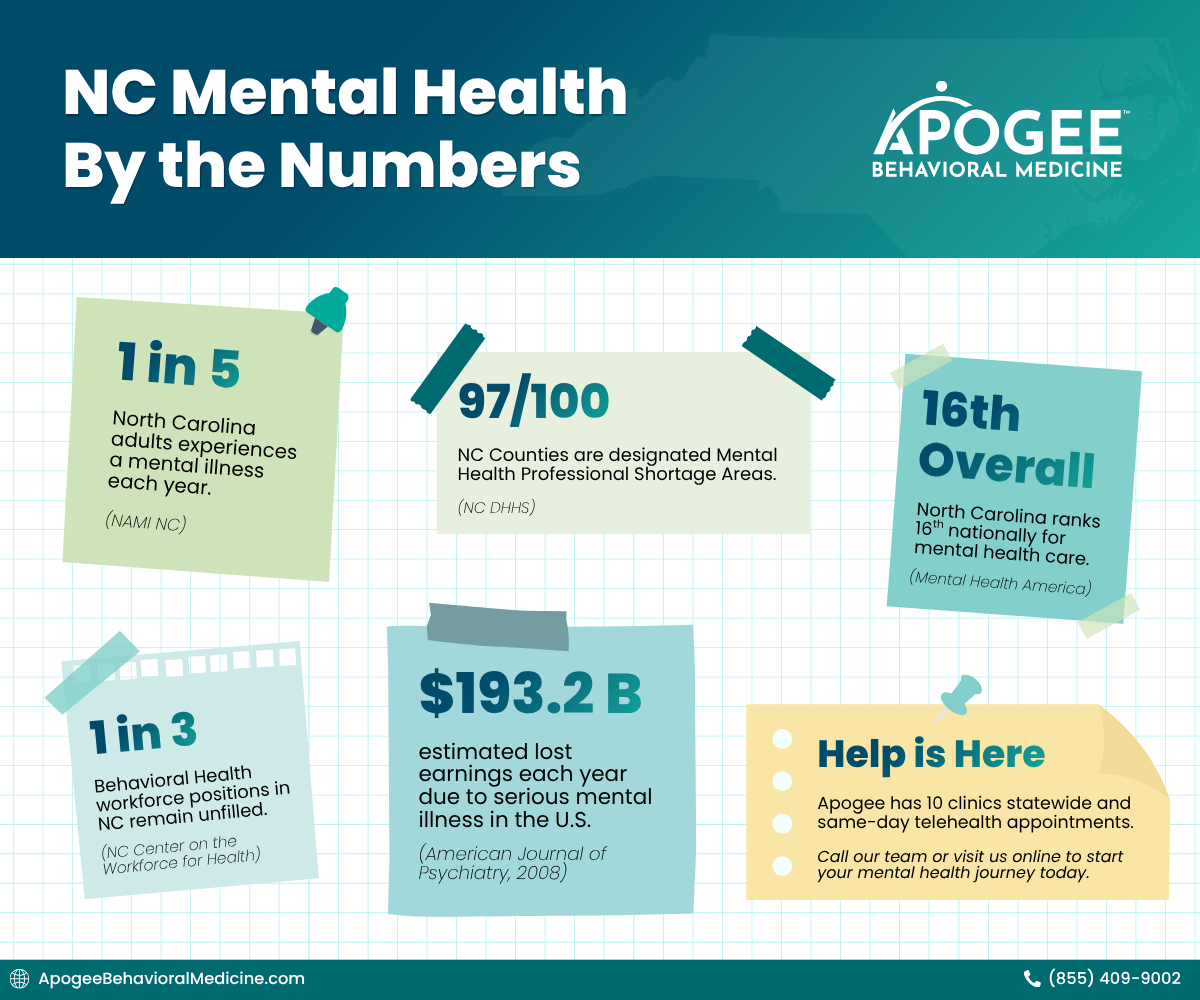
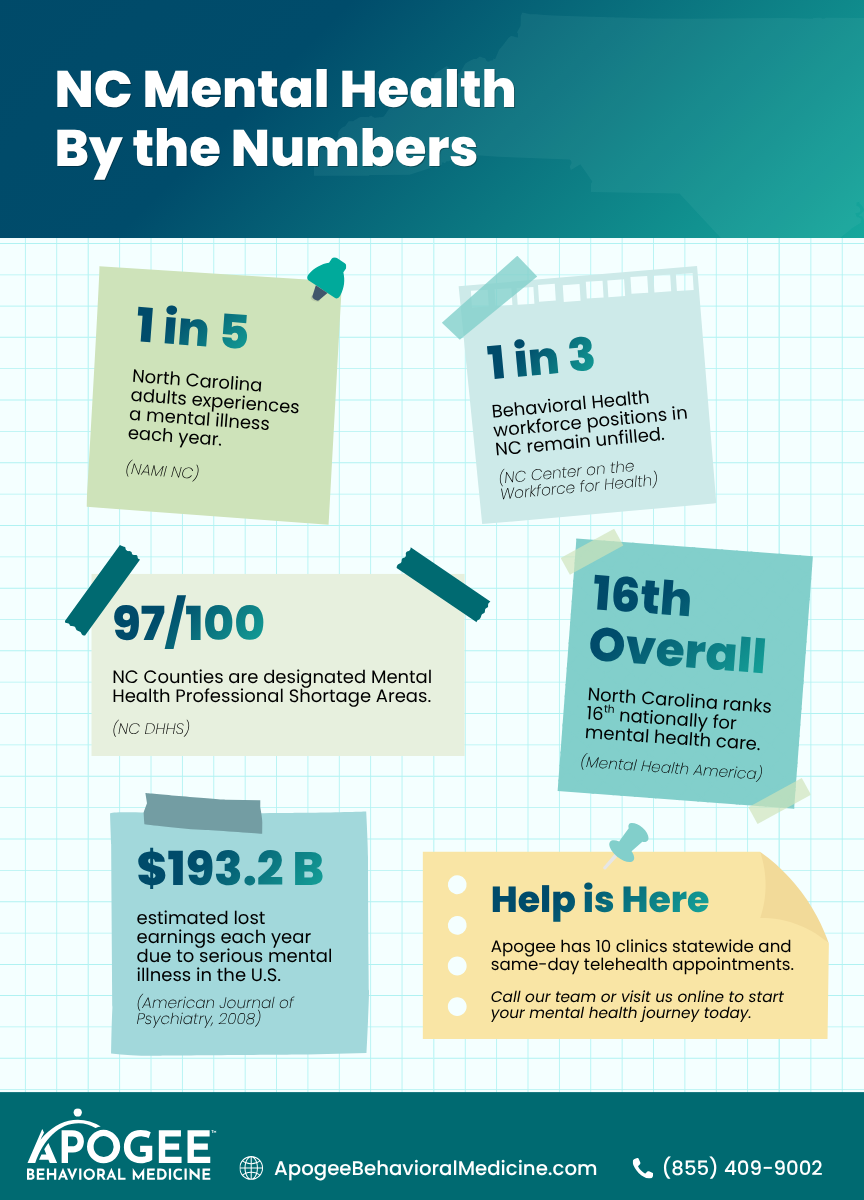
In its 2025 State of Mental Health in America report, North Carolina ranked 16th overall among 50 states and Washington, D.C. The overall ranking combines 17 measures.
North Carolina’s rankings included:
- 16th overall for mental health
- 24th for adult mental health
- 18th for youth mental health
- 6th for mental health prevalence
- 38th for access to care
These rankings offer a useful overview, but they do not tell the whole story. A statewide ranking cannot show how easily each person can find appropriate treatment.
North Carolina’s access-to-care ranking is especially important. People may know they need help but struggle to find an available provider. Others may face insurance restrictions, high costs, or long wait times. For patients, having insurance and having easy access to care are not always the same thing.
The state expanded Medicaid eligibility on December 1, 2023. Eligible adults ages 19–64 may qualify with incomes up to 138% of the federal poverty level. Coverage includes many behavioral health services.
Learn more about eligibility through the official NC Medicaid website.
The Most Common Mental Health Conditions in NC
According to NAMI North Carolina’s 2025 mental health data sheet, approximately 1.8 million North Carolina adults experience mental illness each year. That represents about one in five adults.
The data also highlights the needs of people living with more serious conditions. An estimated 471,000 North Carolina adults have a serious mental illness.
Young people face significant challenges, too. Each year, approximately 160,000 North Carolina adolescents experience a major depressive episode. Another 105,000 adolescents have serious thoughts of suicide.
These figures show the scale of mental health needs across the state. However, they do not capture every person’s experience or identify every condition affecting North Carolinians.
Depression and anxiety can affect mood, sleep, concentration, relationships, and daily routines. Other conditions, including PTSD, ADHD, bipolar disorder, and obsessive-compulsive disorder, can also affect quality of life.
But numbers do not tell the whole story. Someone may experience symptoms without recognizing them as signs of a mental health condition. Others may understand they need support but struggle to find affordable, appropriate care.
If persistent sadness, excessive worry, panic, trauma-related symptoms, or changes in daily life concern you, consider speaking with a mental health professional. An evaluation can help clarify what you are experiencing and identify potential treatment options.
Explore mental health services at Apogee Behavioral Medicine to learn more about available care.
Youth Mental Health in NC Is Getting Worse
Youth mental health in North Carolina needs continued attention. Recent survey results show both progress and persistent concerns.
The 2023 North Carolina Youth Risk Behavior Survey results showed improvements in several measures compared with 2021.
Among high school students, the percentage reporting persistent sadness or hopelessness fell from 43% in 2021 to 39% in 2023. The percentage who seriously considered suicide also declined, from 22% to 18%.
These changes are encouraging. However, the remaining rates show that many students still need support.
Mental health concerns can affect a young person’s relationships, school performance, sleep, and everyday activities. Warning signs may include noticeable mood changes, withdrawal from friends, declining grades, or losing interest in familiar activities.
No single change automatically indicates a mental health condition. A pattern of changes, especially when persistent, may warrant a conversation with a trusted adult or qualified professional.
Parents and caregivers can help by listening without judgment and taking concerns seriously. Early support may help young people understand their experiences and explore appropriate treatment options.
Remember: postpartum depression is a medical condition, not a failure as a parent. She may not be able to simply “snap out of it,” and professional support makes a real difference.
To learn about diagnosis, therapy, and psychiatric support options available at Apogee Behavioral Medicine for Postpartum Depression, visit our Postpartum Depression treatment page.
Rural Mental Health in NC Faces Bigger Barriers to Care
Where someone lives can influence how easily they access mental health treatment.
Rural communities across North Carolina may face fewer nearby providers, longer travel times, transportation challenges, and limited appointment availability. These barriers can make consistent care harder to maintain.
The NC Center on the Workforce for Health highlights substantial workforce shortages across the state. Its report notes that 59 of North Carolina’s 100 counties have fewer than one psychologist per 10,000 residents. Twenty-nine counties have no psychologists.
This can create a frustrating cycle. Someone may recognize they need help but struggle to find a nearby provider accepting new patients. Insurance limitations and scheduling conflicts can make the search even harder.
Telehealth offers another way to connect with care. Depending on the service and individual needs, patients may be able to meet with a provider remotely rather than travel to an office.
Apogee Behavioral Medicine offers telehealth mental health services across North Carolina. Availability depends on the service and provider.
For people who live far from a clinic, remote appointments may offer a more convenient way to explore treatment options.
Mental Health Among NC Veterans
Veteran mental health is an important part of North Carolina’s broader behavioral health needs.
Veterans may experience mental health concerns related to combat, trauma, deployment, injury, military culture, or the transition to civilian life. PTSD and depression can affect veterans, sometimes alongside substance use concerns or traumatic brain injuries.
A 2026 report from the RAND Corporation provides state-level data on veterans’ health and well-being. The report found that North Carolina veterans averaged approximately 4.7 days of poor mental health in the previous month. The national veteran average was about 4.5 days.
The report also examined veteran suicide rates using data averaged across 2020–2022. North Carolina’s estimated rate was approximately 29.5 deaths per 100,000 veterans. These figures provide important context, but they do not describe every veteran’s experience.
For veterans and active-duty service members, finding the right support can be an important part of well-being. Some veterans may prefer a provider familiar with military experiences and the challenges that can follow service.
Apogee Behavioral Medicine treats PTSD, depression, anxiety, and other behavioral health concerns. The U.S. Department of Veterans Affairs also offers veteran mental health resources and information about available services. Anyone considering care should ask about provider experience, available services, and whether the treatment fits their needs.
If you are experiencing a crisis: Call or text 988 for the Suicide & Crisis Lifeline, or call/text 1-833-852-6262 for the National Maternal Mental Health Hotline.
In an immediate emergency, call 911 or go to the nearest emergency department.
The Economic Cost of Untreated Mental Illness in NC
Untreated mental illness carries costs beyond healthcare. It can affect workplace productivity, household finances, and the wider economy.
The scale of these losses is substantial. A 2008 study published in the American Journal of Psychiatry estimated that serious mental illness cost the U.S. economy $193.2 billion annually in lost earnings. Although this is an older national estimate, it illustrates the financial impact when mental health conditions interfere with people’s ability to work. The National Institute of Mental Health summarizes the findings here.
North Carolina faces its own challenges. The NC Center on the Workforce for Health reports that approximately one-third of the state’s behavioral health workforce positions remain unfilled. Its findings also show that many adults with mental illness do not receive the care they need. According to the NC Office of State Budget and Management, nearly one in five North Carolina adults lived with a mental illness in 2022, and 51% of them went untreated. Young people face similar gaps. Only 61% of North Carolina youth with major depressive disorder received treatment.
When people don’t get care, the costs don’t go away. They move into other parts of the economy. The NC Department of Health and Human Services notes that a mental health or substance use condition can limit a person’s ability to work, parent, and take part in their community. It also says untreated depression can lead people to skip medication for conditions like diabetes, which can lead to expensive hospitalizations. These costs are spread across employers, families, and public health systems.
In short, untreated mental illness is an economic problem as well as a health problem. Closing the treatment gap is one way to protect household finances, keep workers on the job, and hold down long-term healthcare costs across the state.
If you are experiencing a crisis: Call or text 988 for the Suicide & Crisis Lifeline, or call/text 1-833-852-6262 for the National Maternal Mental Health Hotline.
In an immediate emergency, call 911 or go to the nearest emergency department.
Obstacles to Mental Health Care in North Carolina
Even when someone recognizes that they need help, several barriers can stand between them and treatment.
Cost and insurance
Cost is a common concern when seeking healthcare. NAMI found that among the 452,000 North Carolina adults who did not receive needed mental health care, 44.8% said cost was the reason.
Medicaid expansion has made coverage available to more eligible residents, with nearly 735,000 people enrolled. Even so, patients should confirm which providers accept their insurance and which services their plans cover. Before scheduling, ask about insurance participation, copays, deductibles, and any prior authorization requirements.
Provider shortages
A shortage of mental health professionals can make timely appointments difficult to find, especially in rural communities. NC DHHS reports that 97 of the state’s 100 counties are designated Mental Health Professional Shortage Areas. A UNC Sheps Center-led study found that 25 counties have no psychiatrist. Telehealth care at Apogee is one way we can help address some geographic barriers, depending on the treatment needed.
Stigma
Some people delay care because they worry about being judged. Others believe they should manage symptoms without outside support. A 2025 High Point University poll found that about 76% of North Carolinians agree that people with mental health conditions face discrimination in everyday life.
Mental health treatment is healthcare. Seeking help for depression, anxiety, PTSD, ADHD, or another condition is not a sign of failure.
Long wait times
Waiting weeks for an appointment can feel especially difficult when symptoms interfere with daily life. Limited provider availability may also make it harder to find a convenient appointment.
When contacting a practice, ask about current availability and whether it maintains a cancellation list. If the first provider cannot help, asking for referrals may open other options.
If you are experiencing a crisis: Call or text 988 for the Suicide & Crisis Lifeline, or call/text 1-833-852-6262 for the National Maternal Mental Health Hotline.
In an immediate emergency, call 911 or go to the nearest emergency department.
What Getting Mental Health Care in NC Looks Like
Getting mental health care does not require knowing exactly what is wrong. The first step can simply be describing what you have been experiencing to a qualified professional.
Depending on your needs, treatment may include:
- A psychiatric evaluation
- Individual counseling
- Family counseling
- Medication management
- Psychotherapy
- Telehealth appointments
- Transcranial magnetic stimulation (TMS)
- Spravato® treatment when clinically appropriate
- A combination of therapy and medication
The right approach depends on your symptoms, history, preferences, and treatment goals. Not every treatment is appropriate for every person, and a plan can change over time as your needs change. At Apogee, providers will explain your options, answer your questions, and work with you to find what fits, so you never have to figure it out alone.
If you are experiencing a crisis: Call or text 988 for the Suicide & Crisis Lifeline, or call/text 1-833-852-6262 for the National Maternal Mental Health Hotline.
In an immediate emergency, call 911 or go to the nearest emergency department.
Apogee Behavioral Medicine: Mental Health Care Across NC
For North Carolinians looking for behavioral health support, Apogee Behavioral Medicine offers in-person care at multiple locations and telehealth services statewide. Specialized treatments, including TMS therapy and Spravato® treatment, are available at select locations.
Our North Carolina locations include:
- Asheville
- Charlotte
- Durham
- Fayetteville
- Greensboro
- Greenville
- Hickory
- Mooresville
- Mount Airy
- Raleigh
- Winston-Salem
The practice treats a range of concerns, including depression, anxiety, PTSD, ADHD, bipolar disorder, and obsessive-compulsive symptoms. Apogee accepts multiple insurance plans, but coverage and service availability vary by plan, service, and location. Contact the practice to confirm benefits and available options before scheduling.
If you are experiencing a crisis: Call or text 988 for the Suicide & Crisis Lifeline, or call/text 1-833-852-6262 for the National Maternal Mental Health Hotline.
In an immediate emergency, call 911 or go to the nearest emergency department.
Ready to take the next step?
Finding the right mental health support can feel overwhelming, especially when cost, provider availability, or uncertainty about treatment stands in the way.
Whether you’re exploring treatment for the first time or looking for a different approach to care, our team can help you understand your options and determine what may be right for you.
Ready to get started? Make an appointment online or call Apogee Behavioral Medicine at (855) 409-9002 to discuss available services, insurance coverage, and next steps toward care.
FAQs About Mental Health in NC
Mental illness is common in North Carolina and affects people of every age, background, and community. Conditions such as depression, anxiety, PTSD, ADHD, and substance use disorders can range from occasional symptoms to ongoing conditions that interfere with daily life.
If you have been struggling with your mood, anxiety, sleep, focus, relationships, or ability to manage everyday responsibilities, you are not alone, and effective treatment is available.
Apogee Behavioral Medicine offers psychiatry and behavioral health services at 10 locations across North Carolina, along with telehealth appointments for patients throughout the state. You can explore more of Apogee’s mental health care services here.
Many health insurance plans cover mental health and behavioral health services, though the specifics depend on your plan, provider, and the type of care you receive. North Carolina Medicaid also covers behavioral health services for eligible members.
Before scheduling an appointment, it’s a good idea to confirm that the provider is in-network with your insurance plan and ask about copays, deductibles, prior authorization requirements, and any limits on covered visits. Our team can also help you understand your options before your first appointment.
If you or someone else is in immediate danger, call 911 or go to the nearest emergency department.
If you are experiencing a mental health crisis, emotional distress, or thoughts of suicide but are not in immediate physical danger, call or text 988 to reach the 988 Suicide & Crisis Lifeline. The service is free, confidential, and available 24/7. Trained counselors can provide immediate support and help connect you with local resources.
Rural communities often have fewer behavioral health providers, longer travel distances, limited transportation options, and fewer local treatment programs. Workforce shortages can make wait times longer and make it harder to find specialized care close to home.
Telehealth can help reduce these barriers by allowing patients to meet with licensed providers from home or another private location. Apogee Behavioral Medicine offers telehealth services to help make care more accessible for patients across North Carolina.